
Check Word to PDF formatting before you send
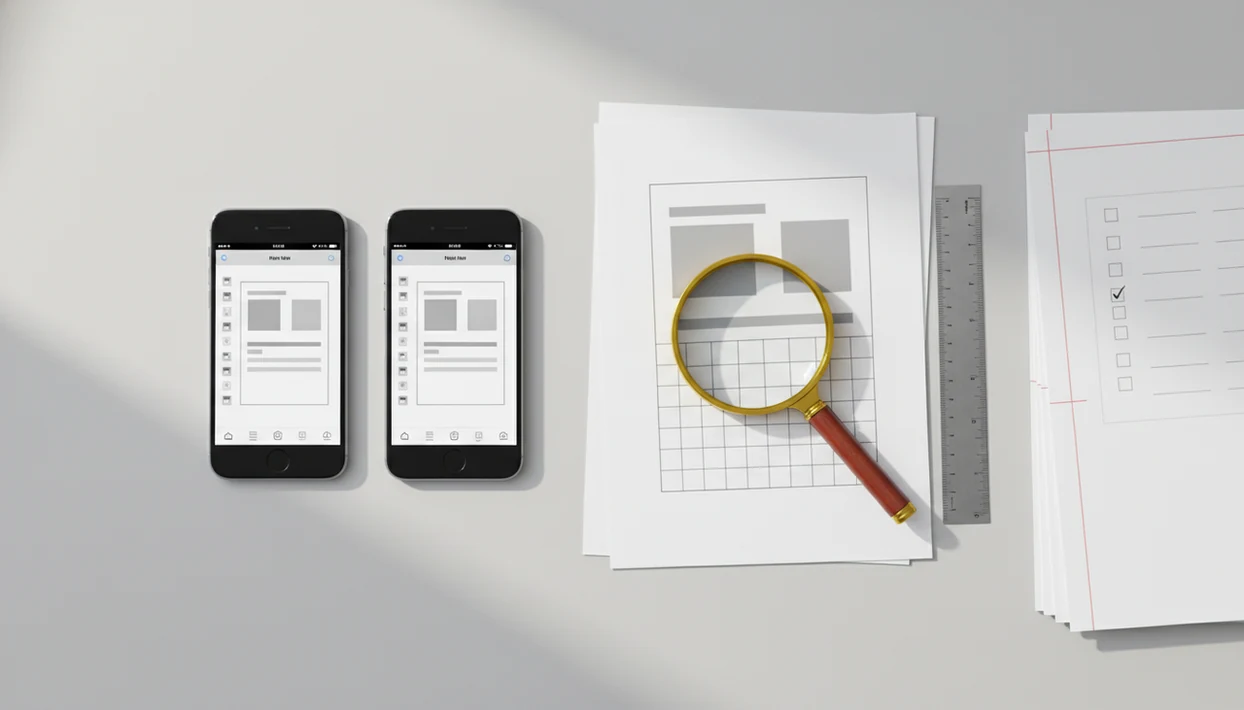
Use a short visual and technical checklist to check Word to PDF formatting before you email, upload, or submit the file. Review the converted PDF for page breaks, fonts, spacing, margins, images, links, page size, accessibility structure, and file size on the device where it will be shared.
> Definition: Checking Word to PDF formatting means reviewing a converted PDF to confirm that the layout, text, images, links, and document structure still match the original Word file.
TL;DR
- Start with the obvious: page count, page breaks, margins, headings, fonts, images, and links.
- Open the converted PDF outside the converter app, ideally in at least one phone viewer and one desktop or browser viewer.
- If you make any last-minute Word edits, reconvert the file and run the PDF formatting checklist again.
Word to PDF formatting check at a glance
PDF is designed to preserve a document’s layout, but Word conversion can still shift small details. To check Word to PDF formatting, review the exported PDF before you send it, not after the recruiter, client, or school portal rejects it.
Use this quick pass first: page count, page breaks, fonts, spacing, margins, images, links, and file size. On a phone, open the PDF in a normal viewer, such as Files preview on iPhone or a PDF reader from the Android Downloads folder. Then zoom out for page shape and zoom in for text quality. If the PDF opens differently in Apple Preview, Adobe Acrobat Reader, Google Drive preview, or a school upload portal, trust the viewer your recipient is most likely to use.
The table borders tell on you fast.
For longer files, compare the Word file and PDF side by side. A single shifted page break can move a signature block, chart caption, or closing paragraph onto the wrong page.
Five PDF formatting checklist facts before sharing
- PDFs preserve layout across devices, but Word conversion can still introduce page, spacing, or font changes.
- A review converted PDF checklist should include headings, page breaks, fonts, margins, images, and hyperlinks.
- Mobile users should open the file in a standard PDF reader, not only inside the converter app.
- Accessible Word structure, such as headings, lists, alt text, and tables, may carry into the PDF when exported properly.
- Formatting problems may require changing Word export settings or using a different conversion method.
A practical PDF formatting checklist works best when it starts with visible layout issues, then moves into links, file size, and accessibility structure. If your main worry is layout drift, our guide to Word to PDF without losing formatting covers the source-document setup in more detail.
For most users, the last useful check happens in the app or portal where the file will be shared.
How Word to PDF formatting preservation works
Checking Word to PDF formatting means verifying how a fixed-layout PDF represents the original Word document after conversion. A PDF stores text, images, fonts, page dimensions, and layout positions so the file can display with the same intended appearance across systems.
PDF has been standardized as ISO 32000 since 2008 (ISO 32000 overview: https://www.iso.org/standard/75839.html), which is one reason it is widely used for final-looking documents. In plain terms, the format is built to hold the page still.
Conversion errors still happen. A DOCX file may use a font the converter cannot embed. A table may be too wide for the chosen page size. Images may be compressed. Different rendering engines may interpret spacing, headers, or line breaks slightly differently. The most common fixes belong in the Word file first, not inside the finished PDF.
Good word to pdf converter app that turns docx and word documents into shareable pdf files on iphone and android should deliver a dependable exported PDF, not a guarantee that every complex Word layout survives without review.
How to use a review converted PDF checklist
A review converted PDF checklist is a short final inspection before sharing. Use it after conversion, and repeat it after every Word document edit.
- Open the PDF outside the Word to PDF app, such as in iPhone Files preview, Android Downloads, a browser, or a desktop PDF viewer.
- Compare the page count against the Word document, then check the first page, last page, and any section breaks.
- Scan the layout for shifted margins, headers, footers, page numbers, tables, and paragraphs that moved to a new page.
- Test the links by tapping website URLs, email links, and table of contents entries inside the exported PDF.
- Check the images for cropping, blur, missing captions, and charts that no longer line up with surrounding text.
- Confirm the file size before email or upload, then reconvert and recheck if you edit the Word file.
For cover letters, rename the final PDF before attaching it. Tiny keyboard edits are where old versions sneak back in.
Mobile Word to PDF app checks on iPhone and Android
Can an app check conversion formatting? A converter can create the PDF, but the final formatting check still needs a visual review in a normal reader.
WordPDF converts DOCX and Word documents into PDF files on iPhone and Android. Use it for the conversion step, then inspect the exported file in portrait view, landscape view, zoomed-out thumbnails, and zoomed-in text or images in a separate PDF viewer.
Mobile checking matters because smartphone ownership is common. Pew Research Center reported that 85% of U.S. adults owned a smartphone in a 2021 survey (https://www.pewresearch.org/internet/fact-sheet/mobile/). That makes the phone preview a realistic place to catch problems before someone else opens the file.
The share sheet open over a document preview is not the finish line. Open the attachment once more.
Page layout, font, image, and link checks in the converted PDF
The core checklist areas are layout, fonts, images, links, and file size. These are the parts most likely to affect whether the PDF looks finished in email, print, or an upload portal.
Layout and page breaks
| Area to inspect | What to verify |
|---|---|
| Page size | Letter, A4, or required custom size stayed correct |
| Margins | Text does not crowd the edge or shift inward |
| Page breaks | Headings, tables, and signature blocks did not split badly |
| Headers and footers | Page numbers, dates, and logos stayed aligned |
If page dimensions are the issue, review how to preserve page size Word to PDF before converting again.
Fonts, images, and links
| Area to inspect | What to verify |
|---|---|
| Fonts | Characters, bold, italic, and line spacing stayed consistent |
| Images | Placement, cropping, resolution, captions, and charts look right |
| Links | URLs, email links, and table of contents links are clickable |
| File size | The PDF fits email limits and upload portal restrictions |
For link-heavy documents, it helps to check how to preserve hyperlinks Word to PDF before the final export.
Accessibility and structure checks for Word to PDF formatting
Accessibility checks matter when the PDF must work for readers using assistive technology. Headings, lists, alt text, tables, and reading order should come from a well-structured Word file, then carry into the PDF through the right export settings.
Tags and reflow options can affect whether the PDF keeps a useful reading order. Tags are structure labels inside the PDF. Reflow is the way content adapts when a reader changes zoom or view settings.
A basic converter should not be treated as full accessibility remediation. If the Word file uses fake headings, blank lines for spacing, or image-only text, the converted PDF may inherit those problems. Fix the source document first, then export again and test the flow in a PDF reader.
Common Word to PDF formatting problems and fixes
Most Word to PDF formatting problems should be fixed in the Word file, then converted again. If the PDF only looks wrong in one viewer, test another PDF reader before rebuilding the whole document.
| Problem | Likely fix |
|---|---|
| Shifted page breaks | Add or remove manual breaks, adjust spacing, and reconvert |
| Changed fonts | Use common fonts or review how to preserve fonts Word to PDF |
| Blurry images | Replace low-resolution images and avoid excessive compression |
| Broken links | Recheck the source hyperlinks, then export again |
| Large file size | Compress images or reduce unused high-resolution graphics |
| Table overflow | Narrow columns, change page orientation, or simplify the table |
Document-heavy workflows make accuracy worth the extra minute. A 2023 Adobe survey reported that 55% of knowledge workers spend at least 10 hours per week working with documents (https://blog.adobe.com/en/publish/2023/03/21/future-of-digital-work). That is a lot of chances for one bad attachment to slow down a process.
A school submission box refusing Word files is annoying. A broken PDF is worse.
Limitations
A formatting checklist reduces risk, but it cannot guarantee that every converted PDF will be flawless.
- No converter can guarantee perfect formatting for every complex Word document.
- Phone screens can hide subtle alignment, spacing, color, and print problems.
- Unsupported or unembedded fonts may be substituted by the converter or viewer.
- Accessibility quality depends on the original Word file and conversion settings.
- Different PDF readers can display edge cases differently, especially with forms, tables, and unusual fonts.
- Last-minute Word edits require reconversion and another full check.
- A checklist does not replace professional prepress review for print-critical documents.
- Password protection, compression, and merging can introduce new issues after conversion.
If a file is a proposal, contract, CV, or print-ready handout, test the exact final PDF. Do not rely on the Word preview.
FAQ
How do I check PDF formatting after converting from Word?
Open the converted PDF outside the converter, then review page count, page breaks, margins, fonts, images, links, and file size. Compare it with the Word file if the document has tables, headers, charts, or strict layout requirements.
Why did my PDF formatting change after converting from Word?
PDF formatting can change because of font substitution, page break differences, image compression, table width, or export settings. Complex DOCX layouts are more likely to show small shifts.
How do I keep Word formatting when converting to PDF?
Use consistent styles, common or embedded fonts, correct page size, stable margins, and properly placed images before conversion. Then export again and review the converted PDF before sending.
Should I check a converted PDF on mobile before sending it?
Yes, especially if the recipient may open the PDF on a phone. Tools like WordPDF can convert the file, but you should still check the exported PDF in a mobile PDF viewer.
Do links always work after conversion?
No, PDF links should be clicked and tested after conversion. Website links, email links, and table of contents links can fail if the source link or export setting is wrong.
Can fonts change when I convert Word to PDF?
Yes, fonts can change if the converter or PDF viewer cannot use the original font. Font embedding and using common fonts can reduce this risk.
Why is my converted PDF file too large?
Large PDFs often come from high-resolution images, long documents, embedded fonts, charts, or uncompressed graphics. Compressing images in the Word file before conversion often helps.
Should I reconvert the PDF after editing the Word file?
Yes, reconvert the PDF after any Word file change. Then run the formatting checklist again, because even a small edit can shift page breaks or spacing.