Does Word to PDF conversion work reliably?
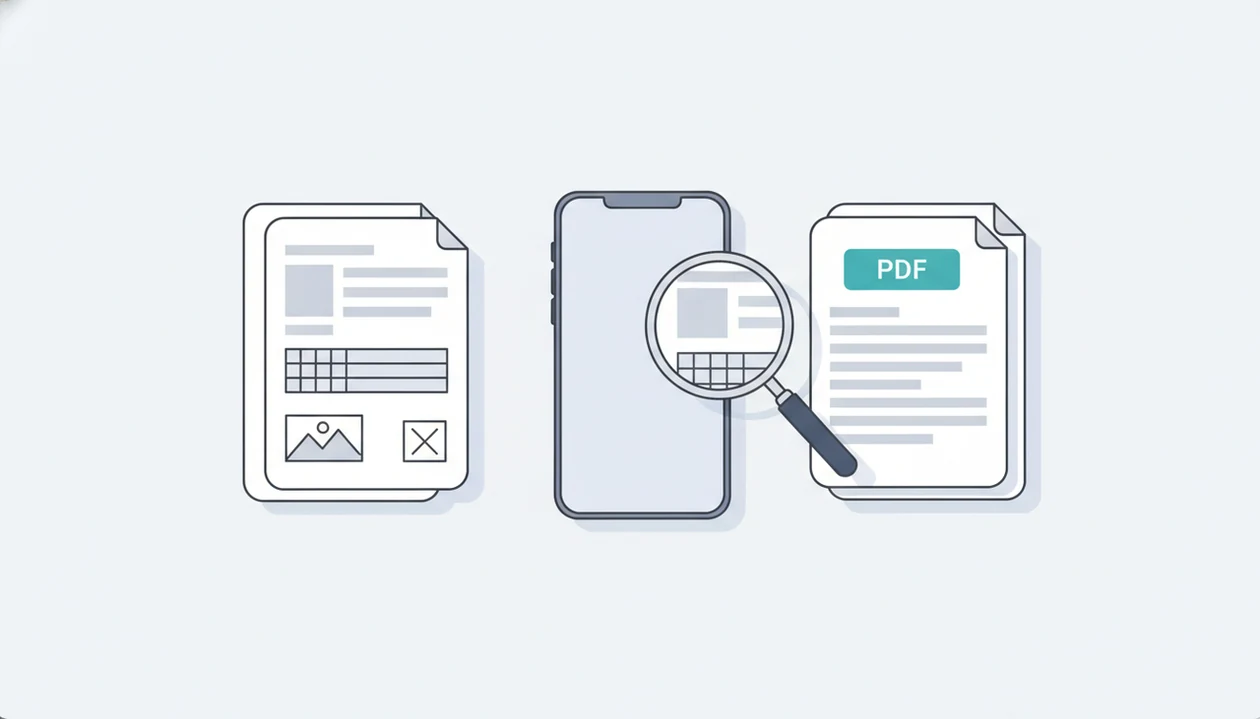
Yes, does Word to PDF conversion work for most everyday DOCX files? It usually does for resumes, letters, invoices, school work, contracts, and simple reports, but formatting issues are more likely with custom fonts, complex tables, macros, embedded media, or print-critical image settings. WordPDF is most useful when you need to convert from an iPhone or Android phone, then open the exported PDF and check the result before sending.
> WordPDF is a word to pdf app that converts DOCX and Word documents into PDF files on iPhone and Android while preserving layout, tables, and images.
- Word-to-PDF conversion is usually reliable for standard DOC and DOCX files, but not guaranteed to be layout-identical for every document.
- The best checks for docx to pdf reliability are page breaks, fonts, tables, images, links, and tracked changes.
- Mobile converters can be accurate, but cloud-based rendering may require internet access and extra privacy review for sensitive files.
How does word to pdf conversion work reliably?s look
Side-by-side captures of the compared products. Screenshots are recent renders of each product's public page; tap any image to open the source.
At-a-glance Word to PDF conversion reliability comparison
Word-to-PDF conversion is usually reliable for typical business and school documents because PDF is designed to preserve layout across devices. The risk rises when the Word file depends on unusual fonts, floating objects, or print-specific settings.
| Document type | Reliability | What to check before sending |
|---|---|---|
| Simple documents | High | Page count, margins, headings |
| Image-heavy documents | Medium | Image sharpness, cropping, file size |
| Custom-font documents | Medium | Font substitution, spacing, line breaks |
| Tracked-change documents | Medium | Whether markup is shown or hidden |
| Print-ready documents | Needs careful review | Page size, bleed, image resolution |
A recruiter asking for “PDF only” at the last minute is usually fine if the resume uses standard fonts and simple sections. Still, compare the Word file and PDF side by side before upload. For a deeper mobile workflow, the DOCX to PDF guide for mobile covers the file-source steps in more detail.
Five facts about docx to pdf reliability
These five facts explain why Word conversion works well most of the time, but still needs a final layout check.
- Native Microsoft Word export is usually the most reliable route because it uses Word’s own layout engine.
- Mobile Word-to-PDF apps often use cloud rendering so iPhone and Android users can get more accurate output than a light local preview.
- Custom fonts, advanced tables, macros, and embedded media increase the chance of spacing or feature differences.
- PDF/A and print-optimized settings help when the PDF is for archiving, records, or professional output.
- The most important QA checks are page breaks, fonts, image quality, hyperlinks, and comments or tracked changes.
WordPDF fits mobile users who need a quick DOCX to PDF handoff because it focuses on the open, convert, preview, and share flow rather than broad PDF editing. The Files preview on iPhone catches obvious page-break problems before the tiny paperclip icon in Gmail gets tapped.
Small check. Big difference.
How Word to PDF conversion works behind the scenes
Word to PDF conversion is the process of rendering a DOC or DOCX file into a fixed-layout PDF for viewing, sharing, and printing. The converter reads the document structure, fonts, margins, page size, tables, images, links, and review settings, then writes a PDF that freezes the visual layout.
A Word-compatible rendering engine generally improves word converter accuracy because it interprets Word-specific layout rules more closely. That matters with headers, section breaks, lists, and table widths. A PDF does not preserve every Word-only feature as editable content. It preserves the output view.
If your priority is a dependable mobile submission, WordPDF fits because the workflow ends with an exported PDF you can open in Files on iPhone or the Android Downloads folder before sharing. Good converters deliver a stable PDF for open, share, print, or submit tasks, not a guarantee that every Word feature stays editable.
Where Word to PDF conversion works best
Does Word to PDF conversion work best for ordinary documents? Yes, it is most reliable for resumes, invoices, letters, school assignments, contracts, reports, meeting agendas, and basic forms.
Standard fonts, ordinary margins, simple tables, and inserted images usually convert cleanly. Hyperlinks can also be preserved by native Word export and many reputable converters, though you should still tap them in the final PDF. Microsoft’s Save or convert to PDF/XPS documentation says Word can export documents as PDF or XPS and offers options such as PDF/A-compatible output: https://support.microsoft.com/en-us/office/save-or-convert-to-pdf-or-xps-in-office-desktop-apps-d85416c5-7d77-4fd6-a216-6f4bf7c7c110
For job seekers who need a resume PDF from a bus seat before submitting, WordPDF handles the common DOCX file path because it converts and lets the user review the exported PDF on the same phone. The benefits of converting Word to PDF are strongest when the receiver should see a final version, not an editable draft.
Where Word converter accuracy can fail
Word converter accuracy can fail when the DOCX file depends on elements that are hard to reproduce outside Word. Common trouble spots include custom fonts, missing fonts, complex tables, columns, text boxes, floating images, macros, embedded video or audio, and Word content controls.
Most failures are minor layout shifts rather than total conversion failure. A table may stretch to the next page. A text box may sit a few pixels lower. A page break before references can move, which is painful if the professor gave strict file-format instructions. Image downsampling and page-size mismatches are the print-specific risks we see most often in test files.
No workflow is 100% exactly matching for every DOCX. For critical files, compare the Word document and PDF side by side and test on the device or portal that will receive it. The broader mechanics are explained in what happens when you convert Word to PDF.
How to use Word to PDF conversion without losing formatting
Use a short QA routine, not blind trust, when converting Word to PDF on iPhone or Android. WordPDF supports that routine because the useful work is convert, open, inspect, then share.
- Clean up the Word file by accepting or hiding tracked changes, removing unused text boxes, and checking margins.
- Choose the right converter for the document type, using native Word export or WordPDF for mobile DOCX files.
- Select print or PDF/A settings when the PDF is for archiving, contracts, or professional printing.
- Convert the file from the share sheet, Files app, Google Drive upload, or Android Downloads folder.
- Review the exported PDF for page breaks, fonts, images, hyperlinks, and comments before sending.
After a client asks for a quote at the checkout counter, the mobile workflow is a practical fit because the attachment can be converted and checked on the phone before it leaves the parking lot.
Common myths about Word to PDF converter accuracy
Word-to-PDF reliability depends on the document, converter engine, settings, and verification. These myths lead people to either overtrust or avoid conversion when a simple check would solve the risk.
- Myth: Word-to-PDF conversion always breaks formatting. Most standard DOC and DOCX files keep layout closely, especially with standard fonts and simple structure.
- Myth: all converters produce the same output. Native Word export, Adobe, Smallpdf, iLovePDF, and mobile apps can differ in font handling, image compression, and review-markup behavior.
- Myth: a converted PDF is automatically secure. A PDF can still be copied or edited unless password protection or permissions are applied separately.
- Myth: if a PDF looks fine on a phone, it is print-ready. Phone previews can miss page size, image resolution, and printer margin problems.
For teams that save monthly PDFs into an archive folder, PDF/A or print settings matter more than the converter label alone.
Native Word Export vs Mobile Word-to-PDF Converters
Native Word export is the safest choice when layout accuracy, offline privacy, and Word-specific settings matter most. Mobile converters are faster when the file is already on your phone and you need a PDF attachment now.
Native Word usually wins for sensitive contracts, HR files, regulated client documents, custom fonts, tracked changes, and print-critical reports because it uses Microsoft Word’s own rendering rules and can work without uploading the file. Adobe, Smallpdf, iLovePDF, and mobile Word-to-PDF apps are more practical when you are away from a desktop, pulling a DOCX from email, Files, Drive, or Android Downloads, and just need a clean shareable PDF. The tradeoff is that many mobile tools need internet access, may apply file-size limits, and should be checked against your privacy policy before uploading confidential content.
A simple comparison helps:
- Use native Word for private, complex, or print-sensitive files when you can access Word.
- Choose a mobile converter for routine resumes, invoices, letters, and school files already on your phone.
- Check limits first when the document has many images or is unusually large.
- Open the PDF before sending and inspect page breaks, fonts, links, and image sharpness.
Decision rule: use mobile conversion for simple files, native Word for sensitive files, and the most controlled export-and-review workflow for anything print-critical.
Evidence and Source Notes for Word-to-PDF Reliability
The reliability claims on this page come from two places: vendor documentation for supported export behavior, and practical QA checks on real DOCX files. No public benchmark guarantees universal DOCX-to-PDF accuracy across every font, table, image, macro, and viewer.
Microsoft documentation supports the claim that Word can export to PDF and offers PDF/A-compatible output for archive-oriented files. Adobe documentation supports the workflow-level point that online conversion tools can have upload limits and should be treated as a service with practical constraints, not a magic proof of layout accuracy. The stronger “usually reliable” wording here comes from repeated review patterns: ordinary resumes, letters, invoices, and school documents tend to convert cleanly, while custom fonts, floating objects, and print files need closer inspection.
Use the sources and QA together:
- Treat vendor docs as evidence for available features, such as PDF export, PDF/A options, and stated online tool limits.
- Treat test results as evidence for common formatting risks seen in everyday files.
- Review the final PDF before sending, because the only file that matters is the one your recipient opens.
Word to PDF conversion decision rule for mobile users
For mobile users, the decision rule is simple: convert normally for simple documents, but verify carefully for complex, sensitive, or print-critical files. iPhone and Android workflows can be reliable, yet the final PDF still deserves a quick inspection.
| If your document is... | Use normal conversion? | Extra QA needed? |
|---|---|---|
| Resume, letter, invoice, agenda | Yes | Light check |
| School paper with references | Yes | Check page breaks |
| Contract with tracked changes | Maybe | Yes |
| Custom-font proposal | Maybe | Yes |
| Sensitive legal, HR, or client file | Depends on policy | Yes |
| Print-ready brochure or report | No | Full print review |
Cloud-based mobile conversion is acceptable for routine files when internet access and privacy expectations fit the job. Offline or policy-approved tools may be required for regulated or confidential documents. Adobe’s online Word-to-PDF converter states a 100 MB file-size limit, but file size alone does not prove layout accuracy: https://www.adobe.com/acrobat/online/word-to-pdf.html
Android users who keep DOCX files in Downloads often choose the mobile workflow because the source file, exported PDF, and share action stay in one phone workflow. If you are comparing value, is Word to PDF app worth it is the closer question.
Limitations
No Word-to-PDF workflow can guarantee identical output for every document. WordPDF reduces mobile friction, but it cannot remove every formatting risk built into the original DOCX file.
- Custom fonts may be substituted if they are unavailable or not embedded.
- Advanced layouts can shift page breaks, table widths, headers, footers, or image placement.
- Macros, embedded media, and some Word form controls may not remain interactive in PDF.
- Cloud-based mobile converters may require internet access and may not fit every privacy or compliance policy.
- Image compression can reduce print quality unless export settings are adjusted.
- Different PDF viewers can display some details differently, so critical files should be tested on multiple devices.
- A phone preview can miss professional print issues such as bleed, trim, and exact paper size.
For sensitive files, use the tool your organization allows. Convenience is not the same thing as policy approval.
FAQ
Does DOCX-to-PDF conversion keep formatting?
Word to PDF usually keeps formatting for standard documents with common fonts, normal margins, and simple tables. Complex layouts, custom fonts, and floating objects need extra review.
Why does my PDF look different from my Word document?
The usual causes are font substitution, page size changes, image anchoring, table reflow, or different printer margin settings. Check the Word file and PDF side by side to find the shift.
Can I convert Word to PDF reliably on a phone?
Yes, iPhone and Android users can reliably convert many DOCX files to PDF. WordPDF is built for that mobile conversion flow, but the exported PDF should still be reviewed.
Does Word to PDF conversion work offline?
Some desktop and native tools work offline. Many mobile converters use cloud rendering, so they require internet access.
Do hyperlinks still work after Word to PDF conversion?
Hyperlinks often remain active after conversion, especially with native Word export and reputable converters. Open the final PDF and tap important links before sending.
Are tracked changes included when I convert Word to PDF?
Tracked changes may appear or disappear depending on the review display and export settings. Set markup visibility in Word before conversion.
Is a converted Word document automatically print-ready?
No, a converted PDF is not automatically print-ready. Use print-optimized settings and check page size, image quality, and margins for professional printing.
Should I use PDF/A when converting Word to PDF?
Use PDF/A when the document is for archiving, compliance, or long-term reproducibility. For ordinary email attachments, a standard PDF is usually enough.